
CROSSING PATHS WITH CELEBRITIES WHILE WORKING IN HOTELS

I worked in hotels for the better part of fifteen years beginning in 1988, initially at the smaller Sheraton Tara Hotel in Braintree, Massachusetts, and then moving on to the much larger Marriott in Boston’s Copley Square. It was at the smaller Sheraton where I first learned how interesting it could be working at a hotel, sometimes in a position allowing you to develop a daily rapport with celebrities. I remember Rod Stewart and his girlfriend Kelly Emberg walking into the empty hotel lobby of the Sheraton Tara during the 1980s to check in late one night. George Michael also stayed with us at the Sheraton during the height of his fame, once exiting the hotel tossing his towel in our direction, a towel that we quickly avoided as we watched it land on the floor.
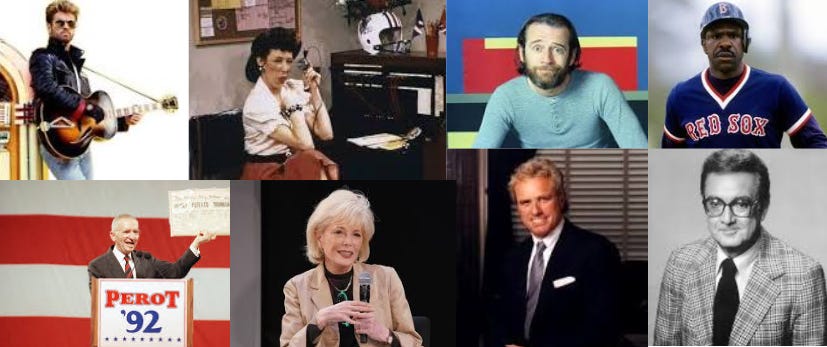
By 1990, I had moved on to the Boston Marriott Copley Place working first at the bellstand and later as a doorman. This was at the height of Boston’s prominent convention years and the city’s hotels were booming. As former Door Captain Andy Krey once remarked about the Marriott, “It had to have been the busiest front door of any hotel on the east coast.” Comedian George Carlin came in quite often, usually arriving late at night. I remember Carlin coming in during the summer of 1991 and being told that the hotel did not have a room available since it was now long after check in time. He actually took the news in stride, not using any of the seven words that you can’t say on television. Maura Mulcahy, a desk clerk working overnight at the time, recognized the famous comedian and intervened, helping to find Carlin an available room. George Carlin came back to the Marriott frequently and even became buddies with one of the doormen. Low key and reserved, Carlin did not carry himself like a celebrity. He was very friendly and could not have been more approachable.
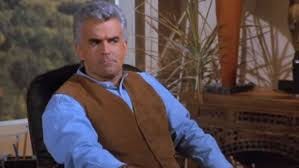
Jonathan Hurley, who at the time was famous for playing J. Peterman on Seinfeld, strolled in one busy afternoon and was waiting in line to check in. Noticing him in line, I whispered to fellow worker Drew Dunbar that J. Peterman was waiting to check in. Drew didn’t believe that it was actually the actor that played Peterman. Only a few feet away, I approached Hurley and told him that my co-worker didn’t believe that he was actually him, pointing over in her direction. He immediately broke into character and loudly exclaimed, “Doesn’t believe that it’s me?” with the Peterman look of astonishment on his face causing everyone within hearing distance to break out in laughter.
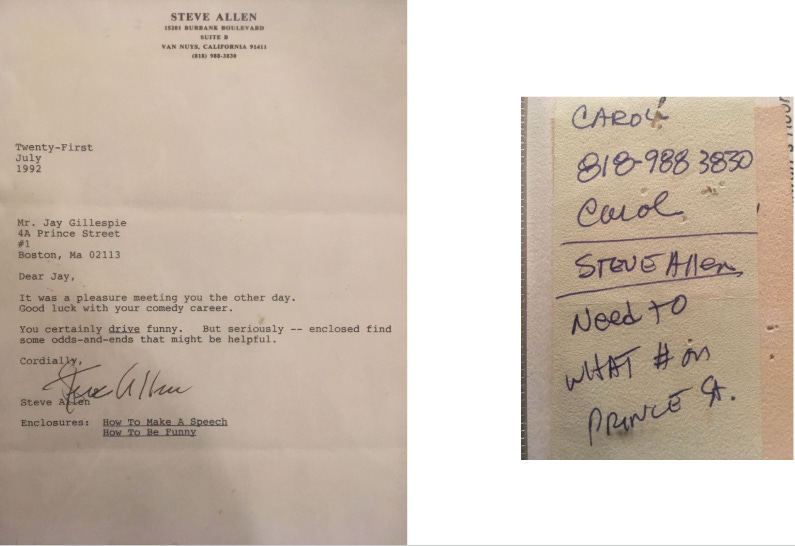
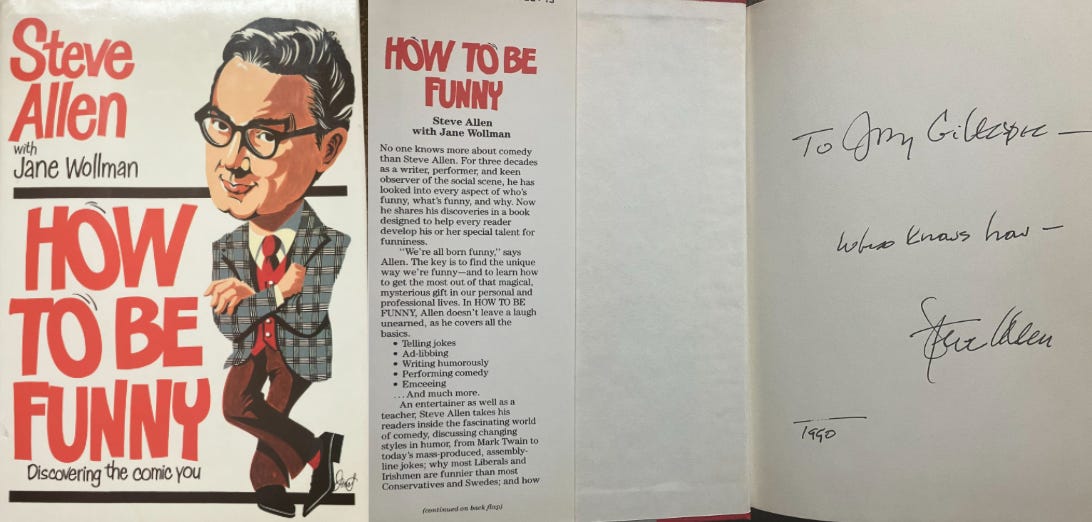
When I drove famous writer, comedian, and television personality Steve Allen to the airport one morning, he became excited when I told him that I had been dabbling in stand up comedy, having done a few shows by that time at Catch a Rising Star in Harvard Square. He encouraged me to keep at it, telling me that it gets easier every time you get on stage, and continued to give me pointers and suggestions all the way to the airport. When I dropped him off he took down my address saying that he wanted to send me a few things. A few days later, his secretary called my apartment in the North End because he had lost my address, having earlier called the hotel’s bellstand to get my home telephone number in order to reach me. My girlfriend took the call while I was out and was humorously dumbfounded as to why her stumbling boyfriend who could not yet make it through college was now being contacted by Steve Allen’s office in California.
On a few occasions I had the opportunity to serve as a driver for Lily Tomlin, taking her back and forth to Logan Airport and also providing her with rides over to Rosie’s Place, the women’s shelter she has always been involved with. Whenever the hotel was picking up a female passenger, we were required to present them with a rose. Lily Tomlin was so much fun to talk to. Once when I dropped her off at the front door of the Marriott she gave me the rose back saying, “You can have this. What am I going to do with it?” The tone she used was reminiscent of her Ernestine character, not far at all from “one ringy-dingy, two ringy-dingies.” Journalist Lesley Stahl also returned the rose. After a great conversation in the car about politics, and specifically President Clinton’s inability to stay awake during virtually every meeting, she promptly gave me back the rose politely telling me that she had absolutely no use for it.
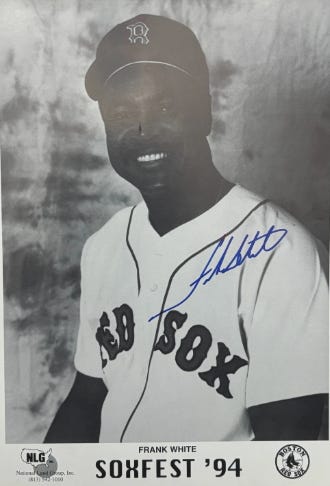
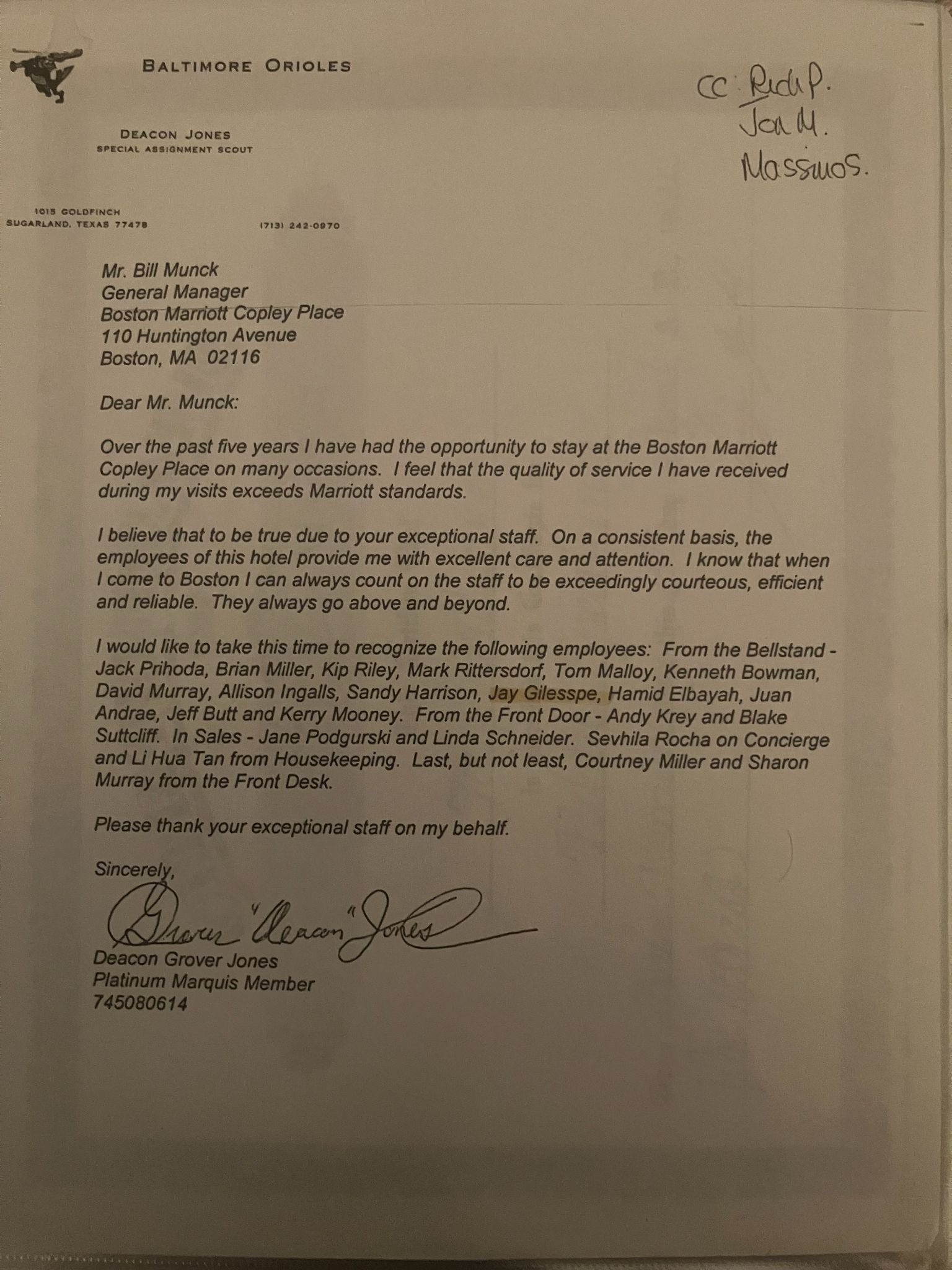
The Marriott Copley was the contracted hotel of the Boston Red Sox during the years I was there, and also the travel hotel for virtually all American League teams except the Yankees, Mariners, Oakland A’s, Cleveland Indians, and the Minnesota Twins. This afforded us many interactions with baseball players and surrounding personnel. When Andre Dawson signed with the Red Sox in the early 1990s, he lived with us in a corner room at the hotel for a time. His young sons continued to wear Cubs hats around the hotel, leading me to believe that Dawson’s commitment to the Red Sox might be limited at best. I once had to drive Hall of Famer Rod Carew over to Fenway Park, and although I wanted to talk hitting with the baseball legend, he instead steered the conversation toward his campaign regarding the dangers of chewing tobacco which I had never even tried. Baltimore Orioles scout Deacon Jones was in and out of the Marriott for years, and the entire staff got to know Deacon well. Red Sox first base coach Frank White lived at the hotel during his three years with the team. Extremely personable, the former Kansas City second baseman was around so much he became like a member of our staff. Frank was even given the keys to the Marriott’s Lincoln Town Car on occasion, allowing him to use the vehicle to explore and familiarize himself with the city. The six tickets he was given by the team behind home plate for every home game were always available to us, seats that would otherwise be empty as his family rarely came to Boston from Kansas City. At the beginning of the baseball strike in 1994, Frank grabbed me in the lobby and asked me to quickly drive him over to Fenway Park. When we arrived, the player’s parking lot was a mob scene. I went into the Red Sox clubhouse with him to help bring personal belongings out. No player could use Major League bags or equipment that had been supplied by their employer so everyone, including Frank White, had to take everything out in large trash bags which we brought with us. We also had to move fast, unfortunately too fast for me to actually relish being in the Red Sox clubhouse.
Having ballplayers around the hotel gave me the opportunity to meet and talk with Steve “Psycho” Lyons when he was with the White Sox, pitching prospect Aaron Sele when he came up with Boston, Red Sox reliever and stroke victim Jeff Gray who spent some time living at the hotel during his recovery, Red Sox second baseman and doubles machine Jody Reed, and Detroit outfielder Rob Deer, whose golf clubs I accidentally loaded onto a truck headed back to Tiger Stadium for the winter after the Tigers finished up the season one year at Fenway Park.
The hotel also had close relationships with the Boston Celtics. I once drove Julius Erving and former Celtics forward Dave Cowens to Logan Airport. During the ride they were frantically signing basketballs in the backseat for an upcoming promotion. When we got to the airport, they asked me to help them bring in what were probably twenty basketballs bouncing around escaping in almost every direction. Once on a morning following daylight saving time during the spring, I accidentally came in for a 6:00 a.m. shift an hour early. That morning I ended up reading the Boston Sunday Globe on a couch in the lobby with Shaquille O’Neal, exchanging parts of a scattered newspaper that sat between us. I never made mention of who he was, which I’m sure he appreciated. To his credit, he never asked who I was.
Ed Rollins, the conservative political strategist who was representing Ross Perot at the time, was with me in the limo the morning that Perot dropped out of the 1992 presidential race. Perot was a popular candidate, and the story of his exit was all over the news that morning. Perot had been disturbed by the Bush campaign allegedly interfering with his candidacy by releasing a false narrative about his daughter. I was able to discuss the matter first hand with Rollins that morning who told me that Perot had called him in the middle of the night and was concerned about the damage that could be done to him personally, asking Rollins for his best advice. Rollins told him, “Don’t read the papers.” Perot dropped out of the race hours later.
While taking a colloquium class about nationalist struggles at Boston College during the summer of 1994, I drove a woman from the airport back to the Marriott who had come in from the country of Ukraine which had recently regained its independence with the collapse of the Soviet Union. We had a conversation about the Ukrainian struggle for independence. She shared her belief that the American claim of winning the Cold War was simply patriotic propaganda. She told me there was really only one generation of Ukrainians, during the time of Stalin, that was forced to refer to themselves as Russians due to fear and intimidation. She said that their proud Ukrainian independence was always inevitable.
U.S. Representative Joe Kennedy, working out of his local Brighton office, would sometimes stop by the hotel for both events and fundraisers. Despite the name, Joe Kennedy carried himself like any man on the street. He insisted on putting his car, a little red Mazda at the time, in the self-parking garage, refusing to leave it out front despite the invitation from the hotel. He also shied away from using the hotel security escort that was provided to lead him up to the ballroom with use of a private elevator. Kennedy insisted on taking the escalators.

There were also musicians who stayed at the Marriott. I was in an elevator with Eddie Vedder and his band in the early 1990s. Although I recognized them as musicians I had no idea who they were and in an effort to make small talk, I asked them who they played with. When they told me they were with Pearl Jam, I associated their name with the popular music festivals of the time like Lollapalooza or the eventual Lilith Fair. They were a bit amused when I said, “Oh yeah, I’ve heard of that.” In 1993 I spent some quality time hanging out with Julian Lennon, who was waiting around the hotel lobby with his band. He could not have been more personable, engaging in genuine conversation about his current tour and his new record, and why his newly released album had an almost formulaic Beatle sensibility to it. Authentic and incredibly humble, Julian Lennon was one of the nicest celebrities I met in all of my years doing hotel work.
During the late 1990s, the Dalai Lama was checking into the Marriott one night, leaving his car outside blocking traffic from getting through the hotel’s street entrance. It was my job as a doorman at the time to keep vehicles moving in front of the hotel. I quickly stepped inside and asked from across the lobby if he wanted to use the self-parking garage or have his car valet parked. His handler quickly walked over to address the situation, angrily asking me if I knew who this was explaining that he was the Dalai Lama. I said, “Ma’am, it doesn’t matter to me if he’s the Easter Bunny. He still has to move the car.” Although too far away to have heard me, the Dalai Lama looked over at me with a big smile, the kind of a grin that could have resulted in years of unfortunate bad karma. Not long after, I strangely left the hotel to become a middle school history teacher, a job where I have now been essentially tortured by 13-year-olds for the past twenty-six years.
Looking back, my hotel jobs were so much fun. And I can now reflect and better appreciate the teachings of the Dalai Lama after our chance meeting. “Silence is sometimes the best answer,” said the Dalai Lama, which I think is excellent advice - especially if you’re about to tell him to move his car.
If you like my articles, please hit the “LIKE” button. It will help to let me know that you are enjoying my writing.
I welcome and invite you to COMMENT.
And please SHARE these posts! This gives added support to my Substack page and also helps to add new readers.
Thanks so much to anyone who is reading Journeys with Jay!
I always enjoy your stories! This one was especially entertaining and enlightening.
Fun stories, Jay, thanks! Closest I ever came was Grant Tinker and Mary Tyler Moore in the late '70's. They were quite nice.